Sunday, June 1st "2025" Daily Prep
Welcome to day 152, known as World Milk Day, National Olive Day, National Barefoot Day, National Billboard Day. Your star sign is Gemini and your birthstone is Pearl (Alexandrite and Moonstone is also recognised).
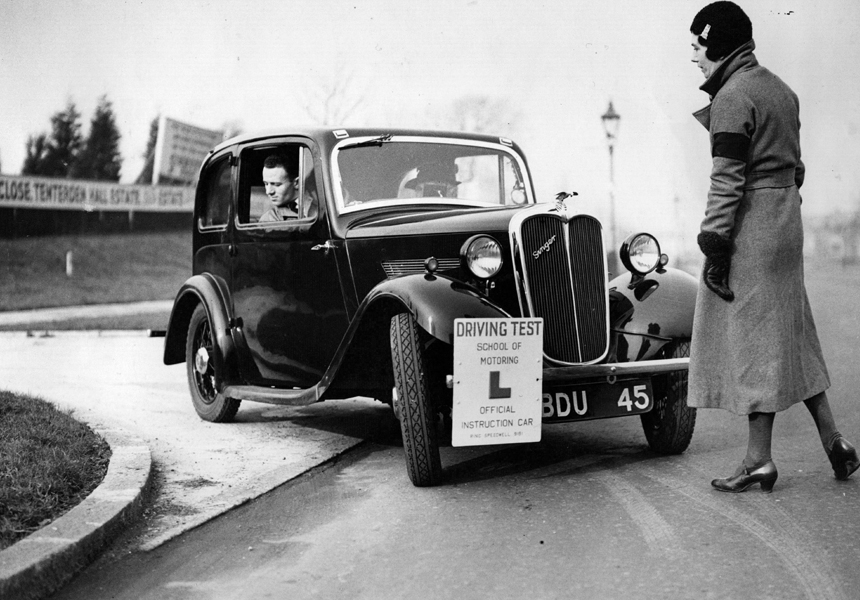
1935 – Britain introduced the compulsory use of ‘L’ plates for learner drivers. Legislation for compulsory testing was introduced for all new drivers with the Road Traffic Act 1934 but the test was initially voluntary to avoid a rush of candidates.
Todays birthdays
1937 – Morgan Freeman (87), American actor (The Shawshank Redemption, Seven, Invictus, Wanted), born in Memphis, Tennessee, United States.
1946 – Brian Cox (79), Scottish actor (Braveheart, Troy, Prisoner’s Daughter, The Bourne Identity, Churchill), born in Dundee, Scotland.
1947 – Ronnie Wood (78), English rock musician and a member of the Rolling Stones since 1975, born in the London Borough of Hillingdon.
1968 – Jason Donovan (57), Australian actor (Neighbours) and singer (“Too Many Broken Hearts”), born in Melbourne, Australia.
1974 – Alanis Morissette (51), Canadian singer/songwriter (“Hand in My Pocket”, “Ironic”, “You Oughta Know”), born in Ottawa, Canada.
1996 – Tom Holland (29), English actor (Uncharted, Spide-Man: Homecoming, Spider-Man: No Way Home, The Impossible), born in Kingston upon Thames.
Famous deaths
2009 – Danny La Rue (b. 1927), born Daniel Patrick Carroll, Irish drag queen performer and singer who did many celebrity impersonations such as Elizabeth Taylor, Zsa Zsa Gabor, Judy Garland, Margot Fonteyn, Marlene Dietrich and Margaret Thatcher.
The day today
1935 – Britain introduced the compulsory use of ‘L’ plates for learner drivers. Also On This Day, all people who had started to drive on or after 1 April 1934 needed to have passed the test. Legislation for compulsory testing was introduced for all new drivers with the Road Traffic Act 1934 but the test was initially voluntary to avoid a rush of candidates.
1938 – The Bren gun was issued to the armed forces service. Bren Gun took its name from Brno, the Czechoslovakian city where it was designed, and Enfield, the location of the British Royal Small Arms Factory.
1939 – The sinking, during sea trials, of HMS Thetis, in Liverpool Bay. It was the Royal Navy’s worst ever submarine disaster and 99 men lost their lives when the torpedo officer opened the test cocks on the torpedo tubes to add weight to the submarine as it was having difficulty diving. In the confusion, the inner door was then also opened and the inrush of water caused the submarine to sink to the seabed. Oxygen on board was quickly running out, levels of carbon dioxide became dangerously high and after 50 hours trapped inside their metal tomb, 99 died of carbon dioxide poisoning. Rescuers could have saved the crew by cutting air holes through the hull when it was resurfaced, but the Admiralty refused, because the submarine would have been permanently weakened.
1968 – Britain and Iceland signed a formal end to the ‘Cod War’ over fishing rights in the North Sea
1974 – The Heimlich Maneuver was published in an informal article “Pop Goes the Cafe Coronary”, for the first time. The life-saving maneuver to rescue choking victims was invented by Henry Heimlich, the technique’s namesake.
2020 – The meteorological office announced that 2020 had been the sunniest spring on record for the UK and the driest May on record in England for 150 years. Wales reported its driest May since 1896, although Scotland saw near average rainfall.
2020 – As a further easing of the coronavirus lockdown rules, groups of up to six people could meet outdoors in England. The Prime Minister, Boris Johnson, described it as a “long awaited and joyful moment” as family and friends reunite after 10 weeks in lockdown.
Today in music
1959 – The first edition of Juke Box Jury aired on the BBC. The shows host, David Jacobs, lead a revolving panel of guests in critiquing the week’s top record releases. Although the songs were never played in their entirety, the four judges gave a verdict on whether each would be a “hit” or a “miss”.
1961 – Elvis Presley was at No.1 on the UK singles chart with ‘Surrender’, his eighth UK No.1. The song was based on the 1911 Italian song, ‘Return To Sorrento.’
1968 – Simon And Garfunkel went to No.1 on the US singles chart with ‘Mrs Robinson’. Featured in the Dustin Hoffman and Ann Bancroft film ‘The Graduate’, the song earned the duo a Grammy Award for Record of the Year in 1969.
1981 – The first issue of the Heavy Metal magazine Kerrang! was published as a special pull-out by UK weekly music paper Sounds. AC/DC had the front cover plus features on Motorhead, Girlschool and Saxon.
2005 – Crazy Frog was at No.1 on the UK singles chart with ‘Axel F’. It started as a mobile phone ring tone, the single is based on Harold Faltermeyer’s film theme, which reached No.2 in 1985.
2006 – The 1994 debut album by Oasis, Definitely Maybe was voted the greatest album of all time in a survey to mark 50 years of the Official UK Albums Chart. The Beatles came in second and third place with Sgt Pepper’s Lonely Hearts Club Band and Revolver, OK Computer by Radiohead was fourth and (What’s the Story) Morning Glory by Oasis was voted fifth.
2016 – Ed Sheeran was revealed as the most-played pop act in the UK in 2015. The singer topped the music royalty body Phonographic Performance Ltd’s (PPL) chart, which is based on TV and radio airplay, adverts and plays in venues like pubs and clubs. Mark Ronson’s ‘Uptown Funk’ was the most-played song of the year, ahead of Ellie Goulding’s ‘Love Me Like You Do’ and James Bay’s’Hold Back The River’.
Today in history
1495 – Friar John Cor recorded the first known batch of Scotch whisky in Lindores Abbey, Fife.
1533 – Anne Boleyn, Henry VIII’s new queen, was crowned at Westminster Abbey.
1648 – The Roundheads defeated the Cavaliers at the Battle of Maidstone in the Second English Civil War.
1670 – Charles II of England and Louis XIV of France signed the Secret Treaty of Dover. As a part of the treaty’s terms, Charles II was to convert to the Roman Catholic Church and send troops and ships to France’s aid in its war against the Dutch Republic. In return, Charles II received a yearly pension from France and a promise of aid if he was faced with a rebellion.
1879 – The death of Napoléon, Prince Imperial (also known as Louis-Napoléon Bonaparte), the last dynastic Bonaparte. After his father was dethroned in 1870, he relocated with his family to England and served with British forces in the Anglo-Zulu War. He was killed in a skirmish with a group of Zulus and is buried in Farnborough, Hampshire. His death destroyed the hope for the restoration of the House of Bonaparte to the throne of France.
1898 – Hotelier Caesar Ritz opens the Ritz Hotel in Paris, the first hotel with electricity on every floor and separate bathrooms.